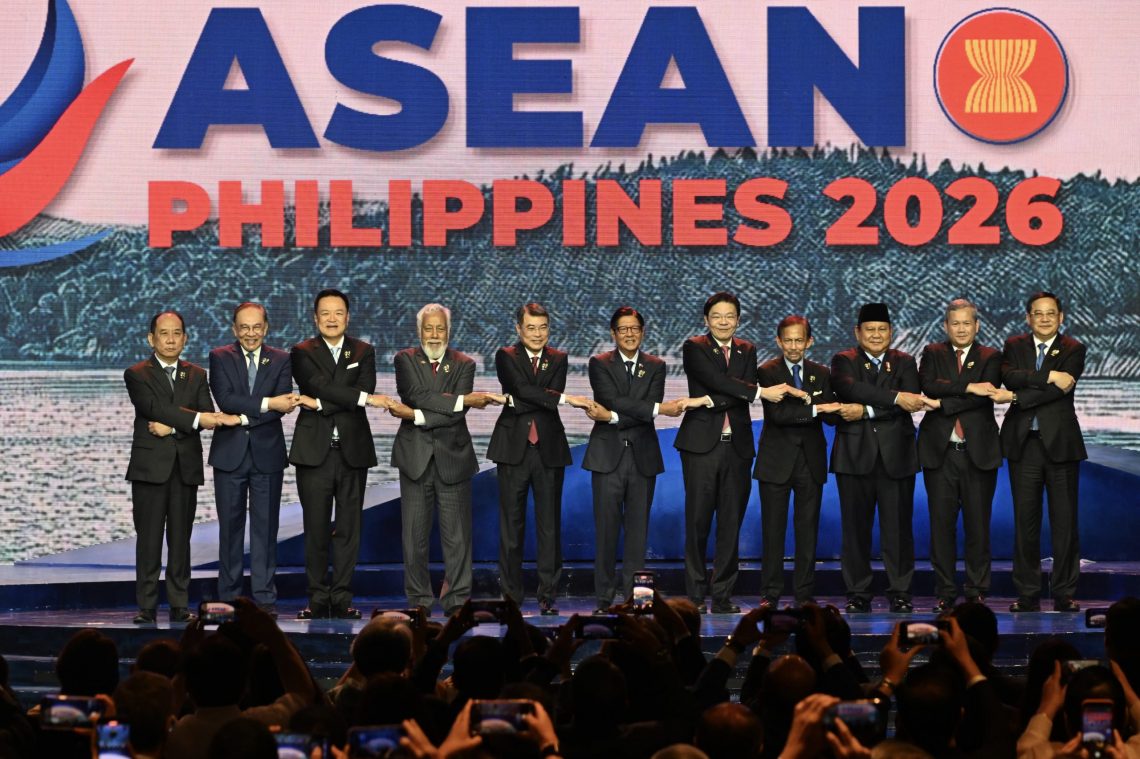
All ASEAN leaders convened at the ASEAN Summit 2026 in Cebu, Philippines, from May 6-8, 2026. The leaders discussed the recent geopolitical and geoeconomic developments, including in the Middle East. They released and adopted the joint statement by ASEAN Leaders on the response to the Middle East Crisis.
They agreed to reaffirm to undertake the following priority actions for regional resilience:
- Strengthening Crisis Coordination, External Engagement, and Institutional Readiness. It focuses on a coherent, timely, and coordinated regional response to crises with cross-sectoral impacts.
- Strengthening Energy Security and Regional Resilience. This includes expediting the implementation of the ASEAN Framework Agreement on Petroleum Security (APSA) to enhance petroleum security, either individually or collectively, and minimise exposure to an emergency situation, through the implementation of short, medium and long term measures. It will be related when one member faces the difficulties and shortage of petroleum, the other will supply temporarily. The Leaders also emphasize the clean and renewable energy transition, broadening sources of crude oil and refined products, and strengthening intra-ASEAN energy trade, as well as accelerate biodiesel and bioethanol blending, promote the adoption of electric vehicles and electric cooking, enhance renewable energy deployment, and explore the role of emerging technologies, including civilian nuclear energy, in accordance with international safety standards. The leaders also want to strengthen and advance multilateral and multidirectional cross-border power trading and the ASEAN Power Grid (APG).
- Strengthening Financial Resilience and Macroeconomic Stability
- Safeguarding Food Security and Agricultural Supply Chains.
- Strengthening Trade, Supply Chains, and Market Stability. The national leaders commit to maintain open, transparent, and predictable markets, as well as secure and open sea lanes, and ensure freedom of navigation, the safe, unimpeded and continuous transit passage of vessels and aircraft in straits used for international navigation, and preserve the unimpeded flow of essential goods, including food, energy and key inputs, in accordance with international law, particularly the 1982 United Nations Convention on the Law of the Sea (UNCLOS). This ensures that the Strait of Malacca remains open for international trade lanes, and they will refrain from introducing unnecessary non-tariff measures and other trade-restrictive measures.
- Strengthening People-Centred and Humanitarian Response
This document can be accessed through this link: https://photos.asean2026.gov.ph/uploads/4d8524bf-0607-4266-86f9-94288335b504.pdf
ASEAN Countries’ Oil Import Dependency
Southeast Asia consumes approximately 5 million barrels of oil daily. With an oil production of around 2 million bpd, key producers such as Brunei (103,000 bpd), Vietnam (197,000 bpd), Thailand (418,000 bpd), Malaysia (570,000 bpd), and Indonesia (840,000 bpd) contribute significantly, but the region must import most of the remaining 3 million barrels to meet its energy needs. Additionally, Vietnam sources 49%, Indonesia 37%, Thailand 28%, and Singapore 17% of their liquid natural gas (LNG) or liquid petroleum gas (LPG) from Gulf countries. The ongoing conflict in the Middle East disrupts this balance of domestic production and imports, forcing a redefinition of supply security. This situation will test ASEAN ability to make decisions, formulate policies, control resources, and exercise sovereignty independently.
Reference:
Carnegie Endowment For International Peace

Leave a Reply